Pages

Showing posts with label cemetery. Show all posts

Funerals and Personal Hopes

Art of the Funeral

A funeral is a collaborative work of performance and art. The funeral is a time for family and friends to support one another, and share intimate memories. A misconception is that a funeral is solely for those who are religious. It is as much a moment of reflection as it is a series of events providing tasks and activities to undertake as an expression of feelings.


Weeping for Ourselves

It is important to note that as much as we grieve for our dead, attending a funeral is just as much about weeping for ourselves. Roussell, describing anticipatory grief writes, “some people have feelings of guilt and anxiety over having too little time to settle issues and put things in order for their loved ones.”1 For others, attending a funeral establishes emotional stability and security through the unspoken promise of reciprocation. 

What do you hope people will remember about you after you die? 
 

Supporting One Another


Funerals offered communities the chance to support to one another. For example, in a scene from the French motion picture “Amelie,” the lead character daydreams about her own funeral. She watches the procession on television and weeps at the sight of people mourning her death. We can identify with this girl. We are at center of our own universe and therefore secretly wish for others to mourn our own deaths. The funeral rite gives us the opportunity to act for others as we would wish them to act for us. When we grieve for others, we subconsciously grieve for ourselves. 

We want our presence to be missed, our deaths to be mourned, and for a death to have meaning. It explains why we host lavish funerals and grand memorials. We yearn to be remembered. Our lives must have had held some meaning. Attending a funeral reminds us that we will someday merit the same honor, respect, and display of affection. To not hold a funeral is not to observe this sacred pact. 

What do you hope people will remember about you after you die? 
Do you have special plans or hopes for your own funeral? 

¹ Roussell, J.O. (1999). Dealing with Grief: Theirs & Ours. Staten Island, NY: Alba House.


Funeral Directors Help Facilitate Grief

When a person dies, the world seems to continue right along as though nothing has happened, and to the bereaved this experience can be isolating. A funeral director helps the family by making sure that their beloved is cared for and honored while facilitating the organizational and legal aspects of the arrangements. According to Worden, “often the immediate family members are in a dazed or numb condition and the service does not have the positive psychological impact that it might have.”2 While this can be an issue, these families still benefit from just being with those support them through their loss. They want to be comforted. They want to be with those who understand their loss. The funeral is a supportive place to show respect for the dead, and surviving family and friends.

Do you think Americans need to be more open to public displays of grief? 
 

The funeral home and or cemetery are the socially acceptable places for mourning. This leaves Americans with few places where it is acceptable for grief to be displayed openly. In American culture, we are taught to hold back public display of pain so we do not make others uncomfortable. We are encouraged to shed tears privately, out of sight. This can create disenfranchised grief. Worden recommends, “some type of ongoing contact with these families might be considered for the purpose of grief counseling.”2 The funeral meets a family’s spiritual, psychological, and social needs as they share the pain of losing someone loved. The funeral rite gives us a universally understood social tradition to observe for coming together. Thus, the funeral is one of the few events where people are not judged as harshly for showing emotion. This makes the funeral director's job of creating conducive atmosphere for healing all the more important. By offering the bereaved a place to address these feelings, funeral directors help to facilitate grief and allow survivors to find meaning through the funeral rite. 

How have funeral directors helped you or a loved one? 
Do you think Americans need to be more open to public displays of grief? 

² Worden, J.W. (2009). Grief Counseling and Grief Therapy. A Handbook for the Mental Health


Visit a Cemetery this Valentine's Day

It's Valentine's Day, and for most people it signifies a time for romance, sweet gifts, and happy couples enjoying a day that focuses on love. But what about a surviving spouse, family member, friend or partner of one who has already died? 

Holidays provide a perfect opportunity to reflect on the memories that keep a loved one alive in spirit. While some like to visit friends or family to reminisce, others enjoy looking through old photos or reading old letters. Visiting a favorite and memorable place, special to your loved one, can also be a thoughtful way to spend the day. Visiting the cemetery to remember a loved one by cleaning the grave, dropping off flowers, or just spending time, is another meaningful choice.

Whatever you decide to do this Valentine's Day, remember your loved ones, living and past, and have a Happy Valentine's Day.

Smart Shovel Grave Detection Instruments

Graves don't necessarily correspond to headstones, and headstones can be lost or missing. In older cemeteries, changes of ownership and poor record-keeping can make it difficult to determine the locations of unmarked graves. Grave detection instruments are therefore used to locate graves without disturbing them. Grave detection instruments are also utilized when cemeteries seek to expand into older parts of the cemetery.

Locate hidden or unmarked graves at old historic cemeteries using this ground-penetrating detection device. Scan for vaults and coffins. The smart shovel is a rugged portable locating device. The smart shovel is a geophysical instrument for locating buried human remains. Additionally the device can be used for locating underground markers, lost treasures, and ferrous objects. The device works best in sandy soil often found in flood situations, and produces limited results around rocky terrain, tree roots, and heavy vegetative cover.

Next generation detection device: This product is the first and only detection device to incorporate a shovel head and sifting capability. (Patent Pending)

Smart Shovel: Portable, Precise and Simple to use


Penetrating Radar Detection


In order to preserve our historical record and sacred sanctuaries, Village Memorial is developing the smart shovel to locate graves, coffins, vaults, and headstones wrought from natural disaster or disrepair. This product has a wide range of applications aiming at developing new techniques for finding old, unmarked, damaged, destroyed, or removed graves in cemeteries with affordable noninvasive ground penetrating radar detection. In flood situations, sand soil and debris can upturn, relocate, or conceal cemetery graves and and irregular landscapes of strewn debris may necessitate handheld devices to circumnavigate terrain. Hand held cemetery search devices allow searchers to visualize what lies beneath the surface of the ground without major excavation.

G.P.R. - Ground Penetrating Radar identifies unmarked graves by sending microwave radiation signals deep into the ground . Similar to a cellular phone signal, G.P.R. records cross sectional differences in radar beam signals to tell you where things are. Differences in the soil, tree roots, gopher or tortoise holes or graves can all be mapped. Bodies buried naturally are identified by targeting belt and boot buckles. Once the grave site is located, rod probing can be employed to certify the location of a grave.

Cemetery Underwater After Hurricane Katrina


During Hurricane Katrina, graves were displaced. Japan's 2011 Tohoku earthquake and tsunami moved graves miles from their original location. Most recently, Hurricane Sandy displaced casketed remains in Crisfield, Maryland.


Different materials have variable specific densities reflecting energy in different ways.


Integrating Invisible Technology


Product Details


*Note: Cemetery Prospecting at a historic cemetery battleground is illegal. This product is intended for locating graves, not treasure hunting.

History of Day of the Dead (el Dia de los Muertos)

A Look at Day of the Dead - el Dia de los Muertos

In this video, we explore the origin of the Day of the Dead celebration. We review the development of the holiday, the history behind it, some of the practices, influences, attitudes, and special traditions of remembering loved ones in the Latin American culture.


Please tell us: What do you like best about Day of the Dead? How do you celebrate?

Tips to Clean Cemetery Headstones and Grave Markers

Find out who owns/manages the cemetery you have chosen. Learn what cemetery district you are in and contact your local municipalities to obtain permission to volunteer your time. Many historic pioneer cemeteries are out of perpetual care funding and are unable to afford to maintain their sites. Your request to volunteer, will often be welcomed with gratitude.   

Cemetery maintenance is a time consuming. What is most important is that you feel good about your work. Try to have fun, and pace yourself. It's better to do a little bit of rewarding work each week than to burn yourself out doing in a marathon weekend of drudgery. 

Volunteering in the Cemetery: Cemetery Etiquette

  • Choose a reasonable time to work. (Limit yourself to hours of operation.)
  • Do not clean near mourners who are visiting or while nearby a funeral taking place.
  • Do not leave waste behind.
  • Do not bring pets to roam freely on site while you work.
  • Do not move or remove fresh flowers or recently placed tributes from grave sites.


About Cemetery Stones: Granite vs. Marble

Many private cemeteries require the use of granite for monuments, but for those who allow marble monuments and headstones, it's best to request a "honed finish" rather than a "polished finish". The matte surface of the "honed finish" is helpful in hiding acid etching. 

Additionally, the denser the marble the lower its absorption rate, making it more resistant to wear. White marbles are some of the most resistant, and the best come from Carrara, Italy and Danby, Vermont.

How to Clean Headstones and Grave Markers


Because of age and wear on cemetery headstones, one must take the utmost care when cleaning, mending, or resetting headstones. If a monument is falling apart, appears brittle, or it’s surface seems especially delicate to you, we recommend that you DO NOT handle the artifact as it may be unintentionally damaged in the process. In such cases, it is always best to leave these restorations to professionals.


Below are some DOs and DON'Ts for safely cleaning headstones and grave markers:


DO DON'T
Do bring supplies: Large bucket, Natural Bristle Brushes of various sizes, Water, Colorless Non-ionic soap, (Liquid or paste), A wooden scraper, Gardeners pumping water sprayer, Apron, Dust mask, Ammonia (For cleaning marble or limestone – One tablespoon of ammonia can be mixed into your solution to remove grease and oil.) Don't expect every stone to come completely clean. Vigorous scrubbing can damage your artifact as every cleaning removes some surface material from the memorial stone. It is always better to maintain the integrity of the material over achieving an immaculate finish.
Do thoroughly wash off the stone with water, keeping it wet throughout the entire cleaning process. Don't clean wooden headstones.
Do mix a bucket of non-ionic soap. Don't use flammable or corrosive materials for cleaning.
Do use a natural bristle brush to thoroughly wash off all faces of the monument working from the top down. Don't use bleach to clean as it may stain monuments.
Do use lots of water and keep the stone wet through the entire washing process. Don't sand or scrape with files or wire brushes.
Do use a wooden scraper to remove algae/lichens and other harmful growth. Don't use ammonia to clean metal or bronze surfaces.
Do consider sodding and seeding Don't use high pressure hoses, sand blasters or abrasive chemicals to clean monuments or graffiti.
Do consider wearing headphones. Don't clean a monument more than once annually with the exception of lightly rinsing away dust and bird droppings.
Do keep away from active dig areas. Don't move or remove fresh flowers or recently placed tributes from gravesites.
Do keep your vehicle on paved pathways. Don't work in areas with pests or wildlife


Additional Cemetery Cleaning Precautions

  • Vandalism – Report recent vandalism/graffiti to cemetery management and police department.
  • Graffiti Restoration – Because the most common tool for removing spray paint from surfaces is a pressure washer with a mixture of sand and water, we do not recommend it for tombstone cleaning. In cases of tagging we recommend you seek the help of a professional.
  • Spraying for insects – We do not recommend that you take it upon yourself to spray any kind of pesticides while working on site. Always avoid wasps nests and beehives.
  • Mausoleum flies and other pests should be dealt with by professionals.
Have you cleaned cemetery headstones or grave markers? What advice can you share with others for safe cleaning? 

What You Should Know About Cemetery Burial

Cemeteries Require a Burial Vault or Grave Liner

If a contemporary cemetery has been chosen for the burial, a concrete grave liner or burial vault is usually required by the cemetery. Most cemeteries require this because it keeps the ground level, which makes the land easier to maintain (mow), as well as safer for the families and visitors who walk through the cemetery.

Unless a lawn crypt is already installed in the plot you purchase, you will need to purchase a vault or liner additionally. In Oregon cemeteries, basic concrete grave liners cost less than $1,000 and sealed burial vaults range from $1,500 to $9,000. There are also fees associated with installing the vault (usually around $150) and fees to open and close the grave (usually ranging from $100 for an urn, to $500 to $1000 for a casket). (See the red line of image A left. This is the burial vault or grave liner which surrounds the casket.)

Cemetery Burial Compromise (Ask for a Flipped Burial Vault)

When religious or environmental beliefs require the body to touch the earth, many cemeteries choose to accommodate this request by flipping the burial vault upside down and leaving it uncapped so that the body or the bottom of the casket is laid directly on the soil. Note: In this instance you must still purchase the entire vault, but most cemeteries do not charge to flip the vault for you. This option satisfies the requirements of the cemetery, as well as religious objections and/or environmental beliefs. (See image B at right. Note: grave liner, indicated in red, is open at bottom).


Green Burial

Green burial (or natural burial) grounds do not use containers. This provides a more direct return to the soil. (See image C left. In this instance, a burial shroud is often used).

Green Burial Grounds often use indigenous rock or planting a shrub as a markers. These lands are preserved and function as parks for life to thrive. While the graves disappear into the landscape. Locations are noted with Global Positioning System coordinates. (GIS) also helps pinpoint your loved one's final resting place.

Please share your thoughts on burial. Would you prefer cemetery burial or green burial? What advice can you share with others? 

Green Burial vs Modern Cemetery


Preserve History; Preserve the Earth. 


When it comes to burial, there are two different overall outlooks. One group is concerned preserving precious wilderness and returning naturally to the earth, and the other group wants to preserve and share their history and life experiences with others beyond their lifetime. If we consider this fact, it becomes clear that both contemporary cemeteries and green burial grounds serve a specific, important purpose to society. One preserves our earth. One preserves our history.


Focus each Cemetery on what it does Best.


Some consumers are beginning to inquire about more sustainable endings. They question the necessity of embalming, the cost and material waste of contemporary caskets and wonder why green burial isn’t made more widely available.

Although new green burial grounds have been opening up in answer to these concerns, offering embalming-free burials and biodegradable caskets, contemporary cemeteries have also begun looking to meet the consumer’s desires by offering green burials in their contemporary cemeteries. Additionally, some modern cemeteries even offer green burials right alongside contemporary burials. The question we must ask here is - do families looking for green burial want to be buried in town, in a contemporary, manicured and paved cemetery? For most, we have found the answer is “no”.


What's really driving the green burial funeral movement...


People see modern, paved, landscaped cemeteries as wasteful. They see land as a valuable resource. What green burial advocates are really concerned about is land conservation, not their carbon footprint. Cemeteries and crematories offering carbon offsets are completely out of touch. It's also quite ridiculous to "green wash" a cemetery, labeling it a "hybrid", (offering green burial in the middle of a concrete-lined cemetery.) As you will notice,
the most revered green burial grounds are usually off the beaten path, non-landscaped, non-paved plots of land rife with native trees and vegetation. The families who choose to bury loved ones in these lands don’t want paved roads to get to them. They want the natural process of returning to the earth to take place amid the beauty of nature. They want to contribute to a practice that conserves the land for future generations. These desires are unfortunately not ones that fit well into a contemporary cemetery space. However, this statement is not meant to devalue the modern cemetery. Rather, we would like to point out that the contemporary, paved, manicured cemetery has a grander agenda on its hands than to turn its sights towards "hybrid" burial to address the real issue of infrequent visitation.

Reuse is 100% Eco-Friendly


When we think of green or sustainable, most often the first thing that comes to mind is a biodegradable product or an efficient reuse of resources. Let us consider the three R’s to reducing waste: reduce, reuse and recycle. By actually following the lifecycle of a product, reusing and repurposing the item, this achieves the purpose of sustainability.


A Greener Cemetery is a Frequented Cemetery


The fact of the matter is that modern cemeteries already exist. Their land has already been designated for burial purposes. Their roads are already paved. Their locations are centrally located, well-known, convenient and easily accessed. Green burial advocates do not diminish their significant benefits. However, these locations are simply not frequented.


Modern Cemeteries are Rich in History


Modern cemeteries are rich, historical repositories that have the power to incorporate elements of fun, entertainment, and educational experiences to their visitors. They can transform their conveniently located and gloriously maintained parks into interactive biographical and historical time capsules for families and the public to enjoy.

Technology Brings History to Life


There are so many ways to improve and expand upon these existing cemeteries and memorial parks, yet we do not see the technology face lift taking place. The memorial park can and should be the center of activity in the community. If land is for the living, why not bring these already dedicated parks to life? New technology will improve and reinvigorate the modern cemetery and protect our rich history.

Green Cemeteries = land preservation.  

Modern Cemeteries = history preservation.


We can imagine a rewarding divide taking place between the green burial grounds and modern cemeteries. Let’s consider the purpose of each type of cemetery. While green burial parks will function to preserve green spaces for future generations our modern cemeteries will preserve our local legends, folklore and history. While green burial parks will be the place to go when we want to be reabsorbed back into the earth, our modern cemetery is where we will go to hear the stories of our family, friends and neighbors. Each type of cemetery deserves to function in its strongest capacity. Let’s not dilute the integrity for which each was originally intended.

Our Video on Livening Up Our Cemeteries


Please share your thoughts on natural burial and our modern cemeteries. Can we preserve land and history at the same time? How can we improve our local cemeteries and encourage generations to take an interest in the local history in our cemeteries?

Volunteer to Help Preserve a Historic Cemetery


Looking for a way to contribute in your community? A cemetery is where we remember those who have passed before us, but many are in need of our help.

The Adopt A Cemetery program encourages volunteering and enhances historic memorial parks and cemeteries individuals, organizations, or businesses can make a difference by helping maintain sections of under funded historic cemeteries and memorial parks.

Memorial Day and Veteran's Day flags placed at local and national cemeteries, like Willamette National Cemetery (as seen in the video below) are thanks to the work of local volunteers.


Maintenance and Beautification Volunteers participate in Perpetual Care

Cemetery Volunteers Watered Grass & Added Flowers
  •  Litter removal
  •  Grass Mowing
  •  Weed Digging
  •  Flower Trimming
  •  Tree Planting
  •  Sodding and seeding
  •  Stone cleaning – Headstones, monuments, etc.
  •  Removing graffiti
  •  Clean out dingy old fountains and ponds
  •  Cutting back overgrown vegetation
  •  Planting native species where appropriate
  •  Maintenance
  •  Sprinkler repair
  •  Debris Removal
  •  Resetting toppled headstones
  •  Straightening tombstones
  •  Repairing Cracked Concrete
  •  Polishing plaques


Volunteer Opportunities at Local Cemeteries 


Help Document - Grave Rubbings and tombstone photographic documentation are great ways to record preserve local history for generations to come.

Give Guided Tours? - Volunteer to give a walking tours. Learn your local history and share the fascinating history with others.

Play Music - Play music in the courtyard for visitors on holidays and special memorial events.

Safety - If you see potential hazards while volunteering, stop working and communicate these with cemetery staff. Do not resume assistance until the issue has been resolved.

Have you ever helped volunteer at a local cemetery? Please share your thoughts and advice.

Do you work for a historic local cemetery that needs volunteers? If so, please let our readers know where and how they can help.

Why You Should Avoid Metal Caskets and Coffins

(The Following is Our Own Personal Experience and Original Photos) 

A metal casket like this one (shown at left) may look reverent, sleek, and protective on the outside with automotive finish and shiny accents, but after burial there's nothing dignified about the condition of what lies within.

After running out of space in the family crypt and unable to purchase adjacent spaces, our family had to make a decision. For the elders wishing to be placed in the family plot, the family decided that the eldest remains would be exhumed and cremated to make room. The process was difficult for our family to witness, due to the surprisingly poor condition of the metal caskets. Additionally, the remains of loved ones buried in natural wooden coffins were vastly different from those who were buried in sealed metal caskets.


The choice to use a natural wooden casket or a metal casket could not be more clear. The remains we
saw from the sealed (gasketed) metal caskets were a sludgy mix of chemicals, rust, and body fluids. By contrast, inside a natural wooden casket our grandmother's remains had decomposed naturally into a simple skeleton, leaving no doubt as to which was the superior burial container.


Grandma who died in February 1984 received a direct burial (without embalming) in a wooden casket. Her bones were completely dry and well preserved (placed inside this bag for transport to the crematory). Although her casket had all but disintegrated, her bones were clean and well preserved. There were no body fluids.

After the first exhumation was complete, they began to remove our uncle who died in 1986. As the owner of the crypt he had purchased an expensive modern sealed metal casket.


The workers lowered ropes into the crypt, but upon attempting to remove the metal casket they found that the bottom had rotted through. The metal casket had to be rotated upside down to be removed. The bottom of the metal casket contained a rusty black thick tar-like substance, which was drained onto a cotton sheet. The fabric sheet was set out for drying in order to obtain what bone fragments had been left. Sadly, our uncle's remains were an oily tar-like black muck.


Although our uncle was a large man, and died after my grandmother, there were less remains and what was collected was not recognizable as human remains. Our uncle had been embalmed, so it suprised everyone his body was in such a poor state. This was attributed by the sextons to the fact that our uncle had been buried in a sealed metal casket. The anaerobic bacteria and gases from putrefaction and decomposition under the seal of a gasketed metal casket result in the liquification of remains - A surprising fact considering the main selling point of gasketed metal caskets is to protect your loved one from the elements.

After having seen the condition of the remains buried in the sealed metal casket, we all decided not to leave our other loved ones laying in sludge. So, the decision was made to exhume the rest of our relatives buried in metal caskets for a total of 7 exhumations. For all the relatives buried in metal caskets, each had dissolved into black tar-like liquified remains.

The exhumed remains were removed from the liquid and placed into bags which were re-interred into the niches.

After witnessing this, our mother now the matriarch of the family, made us promise not to bury her in a metal casket. She said she now realizes that it is far more unsavory to be buried in a metal box. She would much rather have her bones cleaned by nature's critters and time than to be buried in a metal casket.


Please share your thoughts about disinterment. Have you ever disinterred a loved one or witnessed a disinterment? If so, please share anything helpful.  
Will you purchase a metal casket after seeing these photos? Why or why not?

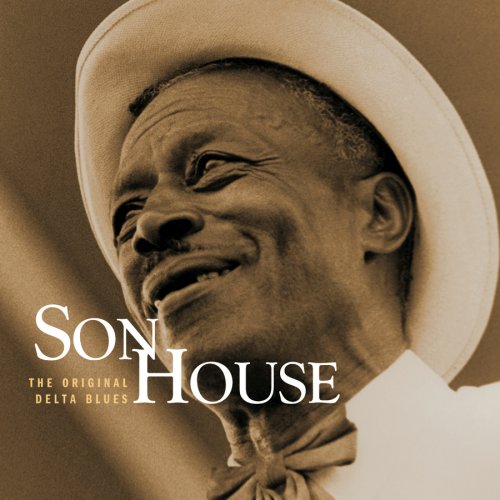
Funeral Music: Son House - Death Letter


You may have heard blues song, “Death Letter” (also known as “Death Letter Blues”) performed by Son House. Son recorded songs were recorded during a 1960’s session. 

According to Wikipedia, which has a page devoted to the song; “Death Letter” is considered to be Son House’s “signature song.” Some refer to Mr. House’s style as “Delta Blues”, which originates from the Mississippi Delta region of the U.S. Wikipedia notes that, Delta Blues is one of the “earliest styles of blues music” and the most dominant instruments used are “guitar, harmonica, and cigar box guitar,” with the slide guitar being “a hallmark of the style.”

Wikipedia says, “Death Letter” was “the centerpiece of Son House’s live performances
during the blues revival of the 1960’s.” He would alter the “tempo and lyrics for different performances”, sometimes playing the song a few times in the same show and “some renditions exceeded 15 minutes in length.” The song has been recorded by many other artists. A simple search on AllMusic.com turns up 297 results for “Death Letter” in songs. Many well-known singers have performed the song including: Lead Belly; The White Stripes; John Mellencamp; Kenny Loggins; Tony McPhee; The Blues Band; and the Grateful Dead.

Eddie James “Son” House Jr. was born on March 21, 1902 and died on October 19, 1988. He was an American blues singer and guitarist “noted for his highly emotional style of singing and slide guitar playing,” says Wikipedia. His innovative style utilized “very strong, repetitive rhythms, often played with the aid of a bottleneck, coupled with singing that owed more than a nod to the hollers of the chain gangs,” according to mojohand.com. Although Mr. House harbored a dislike for secular music he turned to blues performances at age 25 after spending some years as a church pastor. This struggle to cope with his conflicting lifestyles (preacher vs. blues musician) was reflected in many of his songs, says BluesCentric.com,

The song feels very genuine. The lyrics describe a man, receiving the upsetting news that the woman he loved has died, and rushing to pack a suitcase to leave immediately to attend her funeral. It describes the man seeing her dead, “laying on the cooling board”, and feeling the greatest sense of love lost at the burial as “they began to let her down.” The constant rhythm and strophic form is soothing. It’s predictable; we can tap our foot to it, and know what’s coming next. The success in Mr. House’s song is the strength found even in times of deep sorrow and grief.

Our Video on Son House  & His Famous Song "Death Letter"


Please share your thoughts about Son House's song, or other blues songs that have spoken to you.
Have you ever received news of the death of someone you loved by letter or email? 
Did you attend the funeral or memorial service? Why or why not?


Concerns: Embalming and Cemetery Pollution

Americans are concerned that embalming and cemetery burial contribute to pollution.

Here are some embalming/cemetery burial facts:

  • 22,500 Cemeteries across the USA practice contemporary burial and are NOT environmentally sustainable.
  • 827,060 Gallons of embalming fluid used each year. (Enough to fill 8 Olympic sized swimming pools).
  • 5 to 29% - Formaldehyde content in embalming fluid.
  • 9 to 56% - Ethanol content in embalming fluid.
  • 104,272 Tons of steel used each year for caskets and vaults.
  • 2,700 Tons of copper & bronze used each year.
  • 30 Million+ feet of hardwoods used each year to make caskets.
  • 60 Million trees cut down each year to make caskets.
  • 1.6 Million tons of reinforced concrete in the construction of burial vaults. Enough concrete to build a two-lane highway from New York to Detroit.
  • Enough concrete to build 13,573 American houses.

What makes embalming so toxic?

  • 9 to 56%. Ethanol content.
  • These chemical additives discourage the conversion of materials and there is no benefit other than the preservation of remains far longer than necessary. 
  • The World Health Organization classifies formaldehyde as a carcinogen, In addition, Casket manufacturers are listed on the EPA’s top 50 hazardous waste generators list due to chemicals such as methyl and xylene used in the protective finish sprayed on the caskets exterior (a casket that will be buried or burned).

Green Embalming

Contemporary cemeteries and funeral homes are adopting green practices. Many traditional cemeteries are now sectioning off portions of their land for green burials. Additionally, many mortuary chemical companies like Dogde (making formaldehyde-free arterial fluid) and Champion (making Enigma - their line of non-toxic products) are beginning to make safe, environmentally friendly products.


Please share your thoughts about embalming and cemetery pollution: Will you choose embalming for yourself? Why or why not?
Should Americans reduce the use of chemicals in death care?

What is Green Burial?

What is Green Burial?

Green burial incarnates the pure nature of allowing the body to return naturally to the earth. When one opts for a natural green burial, he or she is contributing to the preservation of the land. Green burials are a practical alternative to both traditional burials and cremation. There is either no embalming or embalming with non-toxic, formaldehyde-free fluids, no headstones and no grave liners. (Grave liners are concrete boxes that line the inside of the grave, like an open-ended box with no lid, used to keep regular cemeteries flat for grass to be mowed easily). The container that holds the body (coffin, casket, or shroud) must be 100% biodegradable.

Green burial grounds adopt principles of restoration ecology, to eventually become natural wilderness preserves. Restoration ecologists study the land to learn what is native, what had invaded the land, what wildlife existed, and plan to encourage the restoration and preservation of the grounds. Land is maintained without chemicals or non-native plantings.

Although many consider green burial a new choice in burial options, green burials have been in existence for many years. Families used to care for their own deceased loved ones, and usually buried them on their own property. Although they weren’t called green burials then, we now understand the wisdom of these practices.

Why choose green burial?

Those who choose Green Burial oppose the chemicals used in the traditional embalming process. However, the funeral industry is working to reduce and eliminate these issues. New environmentally friendly embalming fluids and chemicals are now available by some of the leading funerary chemical manufacturers.

To help further reduce waste, green burial supporters choose biodegradable, sustainable solutions for their end-of-life plans. This includes burial choices of sustainably grown woods, woven baskets, natural pottery urns, and other earth friendly materials. However, there is no need to purchase a product to ensure a green departure. Sustainable products include the reuse of retired objects that could be good for the purposes of burial or cremains.


Benefits of Green Burial


  • Environmentally friendly, low impact burials. 
  • Land stewardship and restoration planning. 
  • Sustainable burial methods.
  • Restrictions to keep the grounds exclusively as green cemetery. 
  • Some use naturally flat stones or native trees used for grave markers with GIS coordinates recorded. Others have no grave-markers. 
  • Oftentimes, it is purely forest and meadows 

Green Burial Facts


Enriches Soil. Adds organic material, Improves fertility and productivity. Suppresses plant diseases, discourages insects, increases water retention, inoculates soil with beneficial microorganisms, reduces or eliminates fertilizer needs, moderates soil temperature.

Prevents Pollution. Reduces methane production in landfills, reduces or eliminates organic garbage, reduces or eliminates sewage.

Fights Existing Pollution. Degrades toxic chemicals, binds heavy metals, cleans contaminated air, cleans storm-water runoff.

Aids in reforestation, helps restore wildlife habitats, helps reclaim mined lands, helps restore damaged wetlands, helps prevent erosion on flood plains.

Destroys Pathogens. Can destroy human disease organisms, plant pathogens, and livestock pathogens.

Eliminates waste disposal costs. Reduces the need for water, fertilizers, and pesticides. Extends landfill life by diverting materials and is a less costly bioremediation technique.

Our Video Supporting the Need for Green Burial 


Please share your thoughts about Green Burial. 
Have you known anyone who has chosen a green burial or have you visited a green burial cemetery? If so, what did you find different/like about the cemetery? 
Will you choose green burial for yourself? Why or why not?