Pages

Showing posts with label memorial. Show all posts

Recipe for a Great Eulogy

Many people find writing a eulogy to be a daunting task. An interesting eulogy was found in the book written by Debbie Reynolds, "Unsinkable: A Memoir". 

In the chapter where she discusses her parents end of life wishes and their funerals, she mentions how her daughter, Carrie Fisher, wrote a touching tribute to her grandfather (Debbie's father). As Ms. Reynolds says, "When Daddy died, Carrie wrote a tribute to him that captured so many of his wonderful qualities."


Recipe for Ray (by Carrie Fisher)
(Printed in "Unsinkable: A Memoir" pages 111-112 by Debbie Reynolds)

"take one small stubborn Texan
preferably lean
ad a big busted gal from
                    therabouts
that answers to Maxene
fold in some railroad work,
                    a depression
two kids and a move to LA
beat in a bunch of baseball
(and) you've begun your recipe
                    for Ray
take your small stubborn 
                    Texan
and gently remove all his
                    hair
build him a shop
outsdie any house he's got
and stik a radio there
sift in some well chosen
                    words
a kind heart beneath
leathery skin
stir in some peanuts and
                    coke
a tndency to smoke
sprinkle in dome "Dear Lord"
                    Help us jump in."
[Daddy's version of Grace]
add a dash of the sweetest 
                    smile
some Palm Springs and a
                    little Ouray
fold in a favorite chair
the funny walk that gets him there
add "and the farmer hauled 
                    another load of 
hay" [Daddy's phrase for B.S.]:
 
This recipe for Ray
can be cooked up anytime
it simmers in our hearts
it fills us up real fine."

We thought this idea of a "recipe" made the eulogy a simple and fun way to include all of a friend's or loved one's cherished qualities in an easy to read format.

Have you ever been asked to write or have you written a eulogy? 
What helpful tips can you share?

Memories of September 11, 2001 by Kim Gordon

What do you remember about September 11th, 2001 and the days afterward?

For those of us who lived out of state when the trade towers were hit, our experiences were vastly different. We have our memories that were mostly shaped by television coverage and the reactions within our own communities.

But Kim Gordon, formerly of Sonic Youth, lived in New York City at the time and shares a little about what that time was like in her recent memoir, "Girl in a Band".

"It was a surreal, terrifying day. People....were wandering around... in a daze."

"The next morning...the streets were empty. I got very emotional thinking about New York as I looked down to where the towers once were and I saw a big nothing. It felt like the end."

 "Every morning I got up early and turned on CNN just to make sure nothing else had happened, and I woke up in the middle of the night, too. This is still my sleep pattern."

"Later I found out that most of the power downtown in the financial district ran directly underneath Murray Street....Murray Street itself had chain-link fencing on both sides of the sidewalk and for months it was one big gaping hole, with the sidewalks and pavement regularly wetted down to dissolve the dust still permeating the air. 'Is this to wash away the dust of all the people killed in the towers?' I kept thinking."

It's hard to imagine being so close to the events that changed our world that tragic day.  

Please share: 
What do you remember about September 11th and the days afterwards? 
What happened in your community after September 11th?
How did your friends and family deal with and handle the tragedy?
 

Memorial Day - America Honors the Fallen

Today we remember our fallen soldiers, who died defending the freedoms that we Americans now enjoy. 

Below, we've shared some quotes from others about what Honor and Memorial Day means to them and Video Tour of Portland's own Willamette National Cemetery as they pay tribute to the nation's fallen on Memorial Day.

"Memorial Day isn't just about honoring veterans, its honoring those who lost their lives. Veterans had the fortune of coming home. For us, that's a reminder of when we come home we still have a responsibility to serve. It's a continuation of service that honors our country and those who fell defending it." ~Pete Hegseth

"Memorial Day remains one of America's most cherished patriotic observances. The spirit of this day has not changed - it remains a day to honor those who died defending our freedom and democracy." ~Doc Hastings

"As America celebrates Memorial Day, we pay tribute to those who have given their lives in our nation's wars." ~John M. McHugh

Visiting Willamette National Cemetery for Memorial Day

Take a virtual Tour of Portland's own Willamette National Cemetery in Honor of Memorial Day. (The 240-acre cemetery was completed and officially opened on December 14, 1950.)


Please share your thoughts. What does Memorial Day mean to you? How do you plan to honor the fallen who died defending our country today?

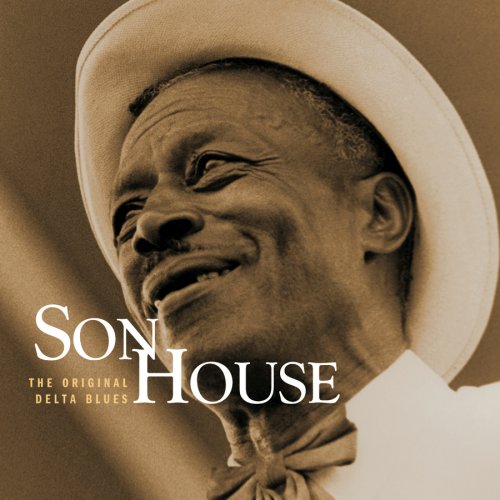
Funeral Music: Son House - Death Letter


You may have heard blues song, “Death Letter” (also known as “Death Letter Blues”) performed by Son House. Son recorded songs were recorded during a 1960’s session. 

According to Wikipedia, which has a page devoted to the song; “Death Letter” is considered to be Son House’s “signature song.” Some refer to Mr. House’s style as “Delta Blues”, which originates from the Mississippi Delta region of the U.S. Wikipedia notes that, Delta Blues is one of the “earliest styles of blues music” and the most dominant instruments used are “guitar, harmonica, and cigar box guitar,” with the slide guitar being “a hallmark of the style.”

Wikipedia says, “Death Letter” was “the centerpiece of Son House’s live performances
during the blues revival of the 1960’s.” He would alter the “tempo and lyrics for different performances”, sometimes playing the song a few times in the same show and “some renditions exceeded 15 minutes in length.” The song has been recorded by many other artists. A simple search on AllMusic.com turns up 297 results for “Death Letter” in songs. Many well-known singers have performed the song including: Lead Belly; The White Stripes; John Mellencamp; Kenny Loggins; Tony McPhee; The Blues Band; and the Grateful Dead.

Eddie James “Son” House Jr. was born on March 21, 1902 and died on October 19, 1988. He was an American blues singer and guitarist “noted for his highly emotional style of singing and slide guitar playing,” says Wikipedia. His innovative style utilized “very strong, repetitive rhythms, often played with the aid of a bottleneck, coupled with singing that owed more than a nod to the hollers of the chain gangs,” according to mojohand.com. Although Mr. House harbored a dislike for secular music he turned to blues performances at age 25 after spending some years as a church pastor. This struggle to cope with his conflicting lifestyles (preacher vs. blues musician) was reflected in many of his songs, says BluesCentric.com,

The song feels very genuine. The lyrics describe a man, receiving the upsetting news that the woman he loved has died, and rushing to pack a suitcase to leave immediately to attend her funeral. It describes the man seeing her dead, “laying on the cooling board”, and feeling the greatest sense of love lost at the burial as “they began to let her down.” The constant rhythm and strophic form is soothing. It’s predictable; we can tap our foot to it, and know what’s coming next. The success in Mr. House’s song is the strength found even in times of deep sorrow and grief.

Our Video on Son House  & His Famous Song "Death Letter"


Please share your thoughts about Son House's song, or other blues songs that have spoken to you.
Have you ever received news of the death of someone you loved by letter or email? 
Did you attend the funeral or memorial service? Why or why not?


Scams Target Wives Listed in Published Obituaries

Obituaries
I’ve written a fair amount of obits for families, many of which have been published in newspapers. I always enjoy the process of making the family’s stories, anecdotes and facts weave together in a concise yet detailed remembrance of their beloved. However, before publishing my stepfather’s obituary I never knew the risks involved.

When my stepfather died, we wrote and submitted his photo with obituary to the local newspaper. A few days after the obit appeared, my mother began receiving strange overseas phone calls demanding money. All the callers claimed to be working for the Federal government. One stated he was from the IRS and stated my stepfather owed back-taxes and if my mother did not comply, she would be sued. Another stated she was calling from the state department, and was conducting an investigation on my stepfather for fraud . All of the callers told my mother to have her attorney contact them, giving her a phone number with a (San Francisco/bay area) 415 area code.  Also, after each threatening call, each caller would sign off with the same farewell message: “And have a blessed day.”

As the calls kept coming, my mother got so stressed out and frustrated that she started yelling back at them.  I begged her to change her number. Once the number was changed, the calls stopped.  Interestingly, when my mother finally called to have her number changed, the lady at phone company had a similar story. The lady’s mother and stepmother also received fraudulent calls after her father died and yes, his obituary too was published in the local newspaper. 

Since my mother was involved in handling their finances, she knew these callers’ claims was false. But what if she hadn’t known? It’s likely such scare tactics might work on a less informed spouse.  

Nowadays, fewer people are keeping a landline at home and even fewer have listed phone numbers. For families who still have listed phone numbers, I’m not sure I would recommend publishing a loved one’s obituary.

Have you ever written and published an obituary? Do you think it’s still safe to publish a loved one’s obituary?  Have you known anyone who has been targeted for scams after publishing an obit? 

Remembering Fallen Officers During National Police Week

It's National Police Week (May 15 - 21). Started back in 1962 by President Kennedy, the week recognizes the service and sacrifice of U.S. law enforcement. Last year, about 160 police officers were killed in the line of duty throughout the U.S.

Below is a Candlelight Vigil in honor of fallen officers.

Home Funeral Trend

Americans - Not Caring for Our Own Dead
Periodically people you know and love will die. The one thing that is certain in life is death. There is no way around it. You and I, our family, community, the entire human civilization alive today will all pass sometime in the next century. This thought is one most Americans try to avoid.

Let’s say your grandmother has had a stroke and is near death at a local hospital. You go to her to be with her in her last moments, and then, the beloved person before you, who had cared for you, raised you, and loved you is gone. No sooner has she passed when, you are asked to leave the room. A doctor will be in to fill out the death certificate and then your loved one will be whisked away to the hospital morgue, or worse to be sliced and probed in autopsy (if the cause of death was unclear). You choose a funeral home and they take care of the rest of the process. Her body is now property of the state. The next time you see her will be for maybe an hour or two at the wake where she’s been specifically prepared for extended viewing time (some liken this as being turned into a human pickle). From there it’s time to head to the cemetery or collect her ashes. It is a process that is far removed from a personal and private investment with your loved one who has passed.

Knox (2009) explains how she felt when her young daughter passed. “I had given birth to her. She had lived with me every day of her life. I had carefully chosen what she was exposed to, what she ate, where she went to school. I was required by law to care well for her. But now that her heart had stopped beating, I was being told that her care was no longer my concern.” Knox (2009) No wonder Americans have such a hard time with loss. Death has been institutionalized and turned into a series of merchandising and purchasing obligations. The whole experience is empty, demoralizing and expensive.

In Support of Home Funerals
Home funerals assist in the healing of and recovery of survivors. One dangerous coping method of loss “is to deny its existence” (Roussell, 1999, p. 6). A home funeral gives people the extra time needed to adjust to the reality that their loved one is gone. Not only is it healthier for the grieving process to have this time, the additional responsibilities also aid the grieving process. Those who have cared for their own dead have found the experience both meaningful and empowering. Knox (1999) describes the home funeral she held for 8-year-old daughter:
We brought her home and kept her in her room for three days surrounded by her beloved toys and pictures and stuffed animals. Her friends came to be with her one last time, and took as much time as they needed to say goodbye. Her teachers came to stroke her cheek. Her brothers, her aunt and uncles, her cousins, her babysitters, her grandparents could all be with her. We could all sit with her for hours if we chose, trying, trying to get used to the idea, trying to take it all in. This small and mighty child had led us through the valley of death, and an entire community experienced a brilliant light in the deepest darkness of loss and grief. It was terrible and beautiful (p. 3).
A home funeral provides a loving, beautiful and meaningful way of saying goodbye, unconstrained by the schedules of a church or mortuary. It also gives the surviving loved ones extra time adjust to the loss. A home funeral is also more cost efficient. An average traditional funeral costs anywhere from $3,500.00 to $7,000.00, while a home funeral and natural burial can cost less than $500.00.

A good comparison of the differences between the two kinds of funerals (home versus mortuary) was showcased in the March 2009 Smithsonian magazine in an article titled “The Surprising Satisfactions of a Home Funeral”.

Legal Rights to Home Funerals
Many people do not know is that it is legal for them to take their loved ones home (in their own car) and to keep them (if cooled) for a number of days. Currently home funeral is legal in 45 states. Also, many people do not realize that embalming is not mandatory for burial and that it is actually a dangerous toxin for the environment. (Read more on the benefits of Green Burial.)

Legally, you can take your own dead home with you as long as you get the proper permit for transporting, and follow approved procedures for cooling, and length of time before burial. Even a home burial is not illegal in some states and counties.

Home Burial
The state of Oregon is silent on this issue. Title 97.120(2) says it is actually up to each individual county as to the laws concerning home burial. Most counties ask for a certain acreage amount, a distance of at least 150’ from a water supply, and at least two feet of earth on top. Before burial, the person in charge must sign the burial-transit permit and return it within 10 days to the registration of the county in which the death occurred. The practice is generally discouraged because of the potential affect on the property value. Because the practice is not common yet, society is still uncomfortable with it. Neighbors might find it disturbing to watch someone bring a body home, hold a funeral in their home, and then bury the body in their yard. However, a number of planned “Green Burial Preserves” are currently in development throughout the country to fulfill the demand for natural burials.


REF:

Alexander, M. (2009) The Surprising Satisfactions of a Home Funeral. Smithsonian Magazine. Retrieved from: http://www.smithsonianmag.com/arts-culture/Presence-of-Mind-Which-Way-Out.html

Knox, E. (2009) Crossings.

Knox, E. (1999). Resource Guide. A Manual for Home Funeral Care. Takoma Park, MD:
Crossings.

Oregon Mortuary and Cemetary Board (2009).

Roussell, J. O. (1999). Dealing with Grief: Theirs & Ours. New York: Alba House.

All content © Village Memorial. 2009-2010.

Green Departures

“Americans put 827,060 gallons of embalming fluid, 1,636,000 tons of reinforced concrete, 104,272 tons of steel [for caskets and vaults], 2,700 tons of copper and bronze, and 30 million board feet of hardwoods into the ground each year...the concrete alone…[is] enough to build 13,573 American houses.”
A growing trend is the practice green or natural burial, which compassionately cares for the deceased and protects the earth. However, this natural and safe method has been practiced for centuries.

Muslims wrap their dead in “white wrappings” and bury them directly onto the dirt of the grave (Jonker, 2006, p. 158). As Jonker (2006) explains, “No coffin is needed or wanted” (p. 158). The body is lowered into the grave “with shawls or lengths of cloth” and is “positioned as if sleeping” (Jonker, 2006, p. 158) with either a stone or pile of mud placed under the head for support (p. 158). The natural burial of the body in Islam (wrappings of just a shroud, no embalming and being placed directly in contact with the earth) allows for a more natural return to the earth. There is no use of unnecessary embalming fluid and coffin to slow the recycling of the body to the soil.

The Jews also bury directly in the ground, and do not allow interment in mausoleums “as this is not returning the body to the dust from whence it came” (Levine, 1997, p. 107). Additionally, like Islam, Judaism prohibits both cremation and embalming (Levine, 1997, p. 107). This law was designed to prevent destruction and or altering of the body, however it is also done for the compassion of the surviving loved ones (Levine, 1997, p. 107). Because “embalming…creates an illusion of life…[it] may hinder the bereaved from acknowledging the death of their loved one” (Levine, 1997, p. 108). These compassionate Jewish values honor the deceased, assist in the healing of loved ones and protect the planet.

Ecohumanist beliefs also support natural burial for the preservation of the planet. One of the principles shared on the Council for Secular Humanist (2009) is to “protect and enhance the earth, to preserve it for future generations, and to avoid inflicting needless suffering on other species.” When one considers all the pollution and waste from common contemporary burials (embalmed body in casket), one cannot ignore the significant and devastating effects upon the earth. Cullen (2006) presents some very startling statistics on contemporary burials.
“Americans put 827,060 gallons of embalming fluid, 1,636,000 tons of reinforced concrete, 104,272 tons of steel [for caskets and vaults], 2,700 tons of copper and bronze, and 30 million board feet of hardwoods into the ground each year...the concrete alone…[is] enough to build 13,573 American houses” (p. 52).
“Like the contents of any landfill, the embalmed body’s toxic cache escapes its host and eventually leaches into the environment, tainting surrounding soil and groundwaters” (Harris, 2007, p. 38). This happens because coffins are not leak-proof. Harris (2007) explains that the “combined body fluids, liquefied tissue, formaldehyde, bacteria, and corporeal acids…collect at the lowest spot of the casket, pooling in a…toxic soup” (p. 37). Wood caskets are porous offering minimal resistance to such toxic liquids, which can easily leak out (Harris, 2007, p. 37). While “metal caskets are more resilient…acids work to breach them as well” (Harris, 2007, p. 37). Cullen (2006) notes that green (natural) burials can “cut that waste [and pollution] dramatically” (p. 52).

Embalming and caskets are not only unnecessary, they are wasteful and harmful to the planet. Obviously the pollution of the earth and the waste of precious resources do not help to protect the purity or safety of our planet. Natural or green burials, as supported by Ecohumanists, are clearly the most ethical and compassionate methods of burial. They help protect the planet for future generations.

References:

Cullen, L. T. (2006). Remember Me. New York: Harper Collins.

Harris, M. (2007). Grave Matters. A Journey Through the Modern Funeral Industry to a Natural Way of Burial. New York: Scribner.

Jonker, G. (2006). The many facets of Islam: Death, dying and disposal between orthodox rule and historical conventon, in, C.M. Parkes, P. Laungani, & B. Young (Ed.), Death and Bereavement Across Cultures (pp. 98-130) London: Routledge.

Levine, E. (2006). Jewish Views and Customs on Death, in, C.M. Parkes, P. Laungani, & B. Young (Ed.), Death and Bereavement Across Cultures (pp. 98-130) London: Routledge.

The Affirmations of Humanism: A Statement of Principles. (2009). Council for Secular Humanism. Retrieved June 2, 2009, from: http://www.secularhumanism.org/index.php?section=main&page=affirmations
All content © Village Memorial. 2009-2010.